Why We Do Not Balance Every Meal
By Layla's Bowl • April 20, 2026

This article may contain affiliate or sponsored links. If you click or book through certain links, we may earn a commission at no additional cost to you.
One of the biggest misconceptions about homemade dog food is that every meal needs to be perfectly balanced.
When people first start researching homemade feeding, they often see recipes that make it seem like every bowl has to contain the exact right amount of protein, vegetables, vitamins, minerals, and supplements.
For us, that approach is not realistic.
It would take too much time, create too much stress, and make homemade feeding feel impossible to keep up with long-term.
Instead, we focus on balance over time.
Why We Focus on Variety Over Time
We think about Layla’s meals the same way we think about feeding people.
A child does not need every meal to be perfectly balanced.
What matters more is what they eat over the course of several days.
That is how we approach homemade dog food too. Some batches may include more beef. Some may include more fish. Some may have more vegetables, more grains, or more eggs.
That is ok.
We think variety matters more than perfection.
Over time, rotating ingredients helps cover more nutrients and creates a more balanced overall diet.
The Problem With Trying to Make Every Bowl Perfect
Trying to balance every meal can make homemade feeding feel overwhelming very quickly.
People start stressing about:
- Exact percentages
- Calories
- Vitamins
- Minerals
- Protein levels
- Fat content
- Whether every ingredient is “correct”
That pressure can make people give up before they ever get comfortable.
We think homemade feeding should feel manageable.
The goal is not to create a perfect bowl every single time.
The goal is to build a routine that you can realistically stick with.
That Does Not Mean Nutrition Does Not Matter
Just because we do not try to make every bowl perfect does not mean we ignore nutrition.
There are a lot of homemade dog food recipes online that are not balanced at all.
We have seen recipes that are:
- Mostly rice
- Very low in meat
- Missing calcium
- Missing healthy fats
- Missing organ meats
- Missing important nutrients completely
That is why we still think it is important to understand the basics of homemade dog food.
For us, that means making sure Layla regularly gets:
- Protein
- Vegetables
- Carbs
- Healthy fats
- Calcium
- Organ meats
- Supplements when needed
We may not measure every single nutrient in every bowl, but we still try to follow general guidelines and keep meals balanced over time.
Why Calcium Is One Thing We Always Prioritize
If there is one thing we do not skip, it is calcium.
Many homemade dog food recipes online do not mention calcium at all.
That is a huge problem.
Cooked homemade dog food does not naturally include bones, which means calcium needs to be added separately.
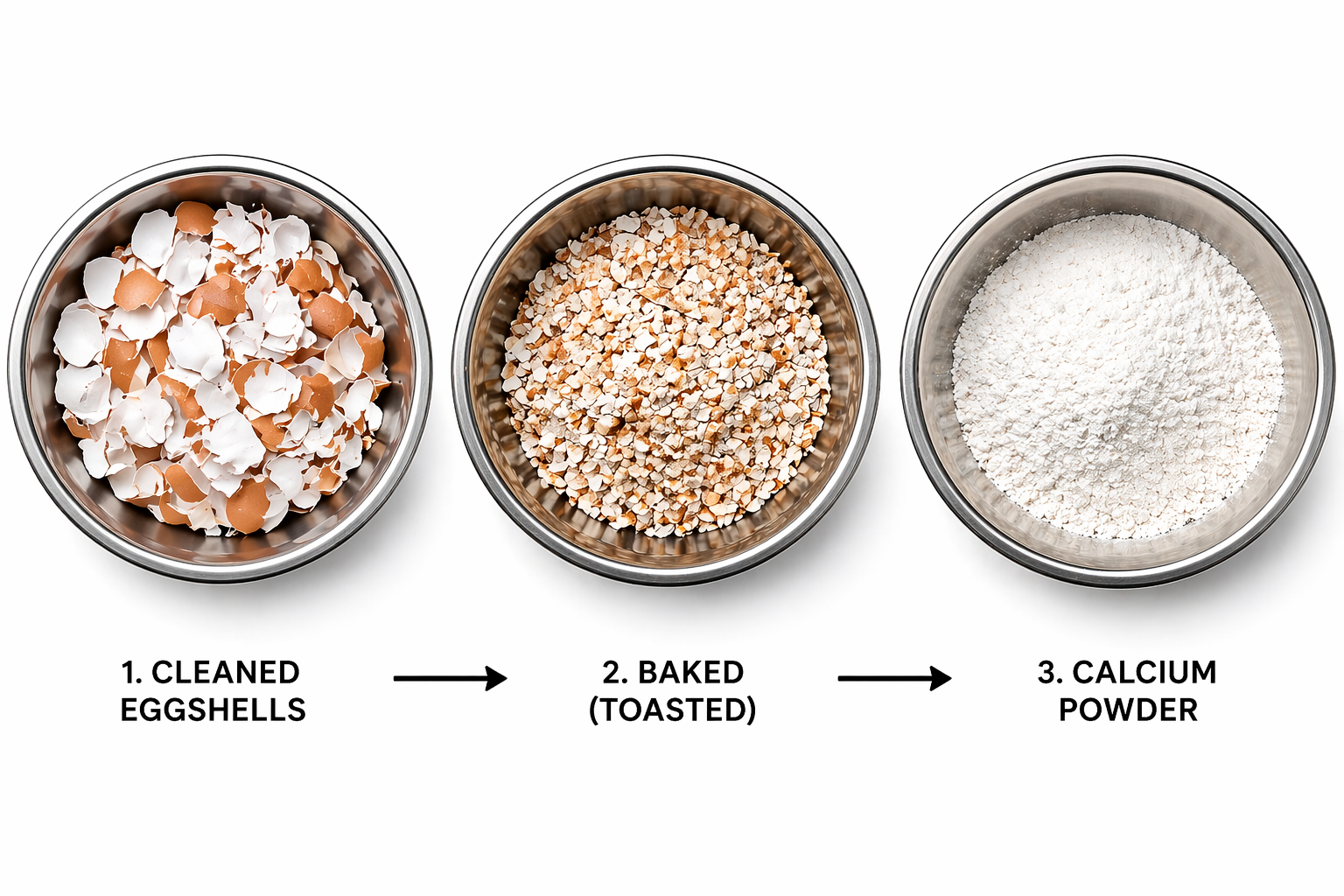
That is why we add calcium to every batch we make. For Layla, that usually means Sea-Cal or homemade eggshell powder. You can learn more about calcium in our Why Calcium matter for Homemade Dog Food page and How to Make Eggshell Powder for Dogs.
Simple Meals Are Ok Sometimes
There are times when a simple meal makes sense.
If Layla has an upset stomach, we may feed her plain rice and chicken for a short period of time.
That does not mean we think rice and chicken is a complete long-term diet.
It just means there are times when simple foods can help temporarily.
Once she feels better, we go back to feeding a more balanced variety of ingredients.
The General Guidelines We Follow
We do not obsess over exact numbers, but we still use homemade dog food guidelines as a starting point.
Most of Layla’s meals are roughly:
- 60 to 75% meat
- 15 to 20% vegetables
- 10 to 20% carbs
Then we add calcium, healthy fats, organ meats, and supplements depending on the batch.
Those numbers are not exact every time, but they help us stay in the right range. For us, that means making sure Layla regularly gets protein, vegetables, carbs, healthy fats, calcium, organ meats, and supplements when needed. We go into more detail about each of those in our guides to Nutrient Basics for Homemade Dog Food and Supplements for Homemade Dog Food.
Why Monitoring Your Dog Matters More Than Perfect Recipes
Instead of focusing on every calorie or gram, we focus on how Layla is doing overall.
We pay attention to:
- Weight
- Hunger level
- Digestion
- Energy
- Coat condition
- Stool quality
If she seems too thin, we feed more. If she starts gaining weight, we cut back. If a certain ingredient does not agree with her, we adjust it.
That has worked much better for us than trying to make every meal mathematically perfect.
Our Biggest Advice
Do not let the idea of “perfect” stop you from feeding homemade food.
You do not need every meal to be identical.
You do not need every bowl to contain every nutrient.
What matters most is learning the basics, keeping things consistent, using variety, and paying attention to your dog over time.
That approach has made homemade feeding feel much more realistic for us.

Latest Posts